


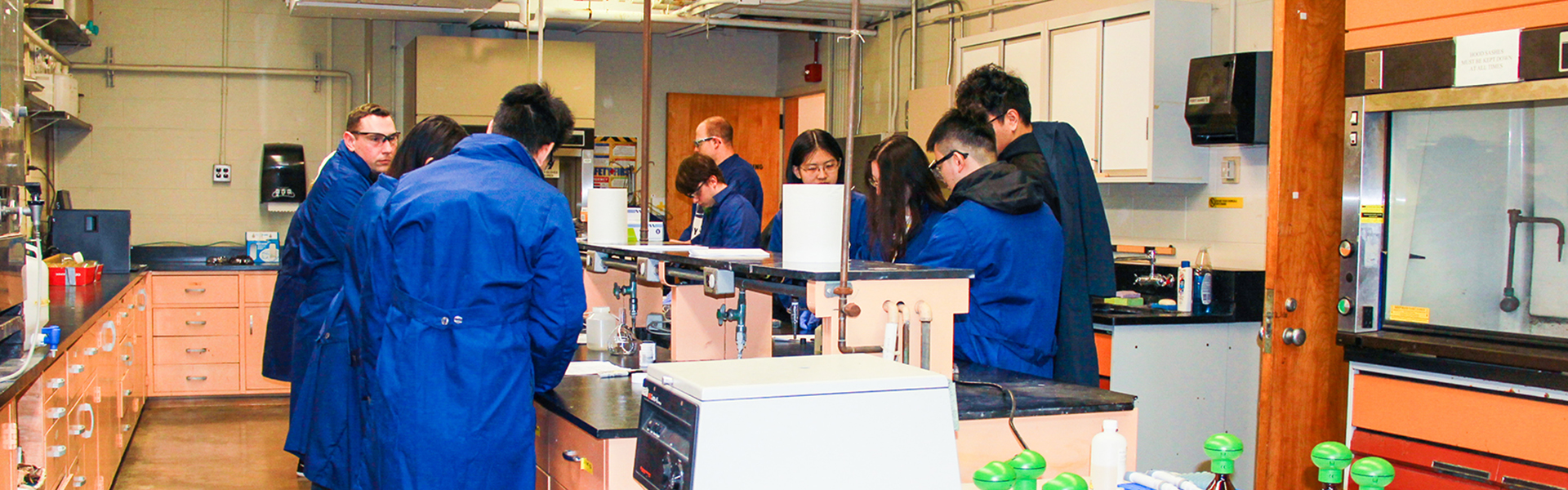
What is Environmental Systems Engineering?
Environmental systems engineering begins with the concept that the Earth and its environment form a complex integrated system whose parts should not be viewed in isolation. The gases, liquids, and solids that make up the earth system meet and interact with each other at interfaces, and an understanding of these interactions facilitates the solution of environmental problems related to air, land, and water, and any associated environmental health hazards. The Environmental Systems Engineering degree program provides a broad background and understanding of the sources, causes, and choices of remedies for industrially related environmental pollution to ensure that the health and welfare of workers and the environment can be preserved.
Environmental systems engineers may take on a variety of tasks or roles, including design projects such as water reclamation facilities, air pollution control systems, wastewater treatment systems, technical support for remediation projects or legal actions, hazardous waste management, stream restoration, environmental investigations, and assessing the environmental impact of proposed construction projects.
Environmental systems engineers also collaborate with environmental scientists, urban and regional planners, hazardous-waste technicians, and other engineers to address environmental problems and environmental sustainability.
Learn more about the career outlooks for environmental systems engineers from the American Academy of Environmental Engineers and Scientists and the Bureau of Labor Statistics.
You Might Like This Program If...
You have strong math, science, and engineering skills and want to apply that to minimize the environmental impact of industrial activities and to protect the health of workers, the general public, and beneficial ecosystems.
Options
Students who enter the degree program in Environmental Systems Engineering have a choice between two curriculum options: Environmental Systems Engineering (ENVSE) or Environmental Health and Safety Engineering (ENVHS).
- The ENVSE option focuses primarily on the impact of industrial activities on the environment and the choice of cost-effective remediation strategies.
- The ENVHS option is concerned with the safe and healthful design of industrial systems so that workers are protected from the potentially high-risk exposures associated with today's industries.
Both options lead to the accredited B.S. degree in Environmental Systems Engineering and follow a similar course schedule over the first two years of study. Specialization in either ENVSE or ENVHS is then achieved through the successful completion of additional required and elective courses in one of the two option areas.
Curriculum
The ENVSE degree program follows a unique interdisciplinary curriculum that is designed to address the critical environmental, safety, and health problems of the basic industries involved in the extraction, conversion, and utilization of energy and mineral resources. All students gain a deeper understanding of both the impact of environmental degradation on society and the effects on industrial activity of society's demands for protection of workers and the environment. The program is complementary to the more general environmental science programs that emphasize the identification and evaluation of environmental problems, and to the classical environmental engineering programs offered by civil engineering departments, whose traditional emphasis is on public-sector concerns of water supply, municipal waste water (sewage) treatment, and solid waste (trash) management and disposal.
ABET Accreditation
The Bachelor of Science in Environmental Systems Engineering at University Park is accredited by the Engineering Accreditation Commission of ABET under the commission’s General Criteria and Program Criteria for Environmental Engineering and Similarly Named Engineering Programs.